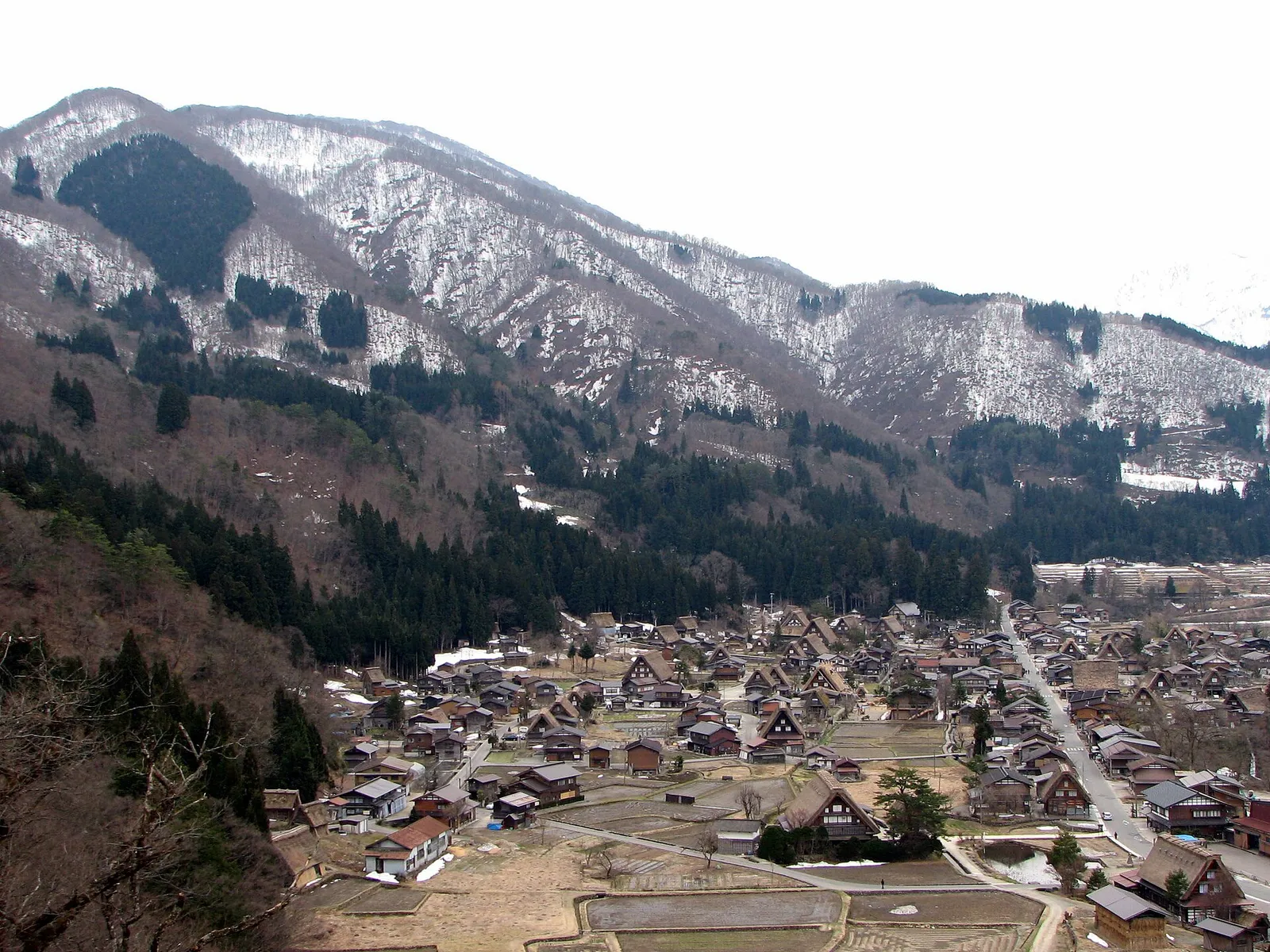
There is a corridor through the middle of Japan that the Tokyo to Kyoto shinkansen skips entirely, and it holds the country’s best garden, a village of thatched farmhouses under deep winter snow, a town where the sake breweries hang a cedar ball outside when the new batch is ready, and a valley in the northern Alps where private cars are not allowed. Five days is enough to cross it properly, and the whole thing works as a line rather than a loop: in from the north or west, out towards Tokyo, without ever doubling back. Read our getting around guide before you book, and check whether a rail pass pays off, because part of this route is bus rather than train and that changes the sum.
Itinerary at a glance
| Day | Base | The signature experience |
|---|---|---|
| 1 | Kanazawa | Kenrokuen garden, then gold leaf in the craft district |
| 2 | Kanazawa | The samurai and geisha quarters, and the fish market |
| 3 | Takayama | Shirakawa go’s thatched roofs from the viewpoint |
| 4 | Takayama | The morning market and a sake brewery tasting |
| 5 | Matsumoto | Kamikochi valley, or the black castle |
Day 1: Kanazawa and Kenrokuen
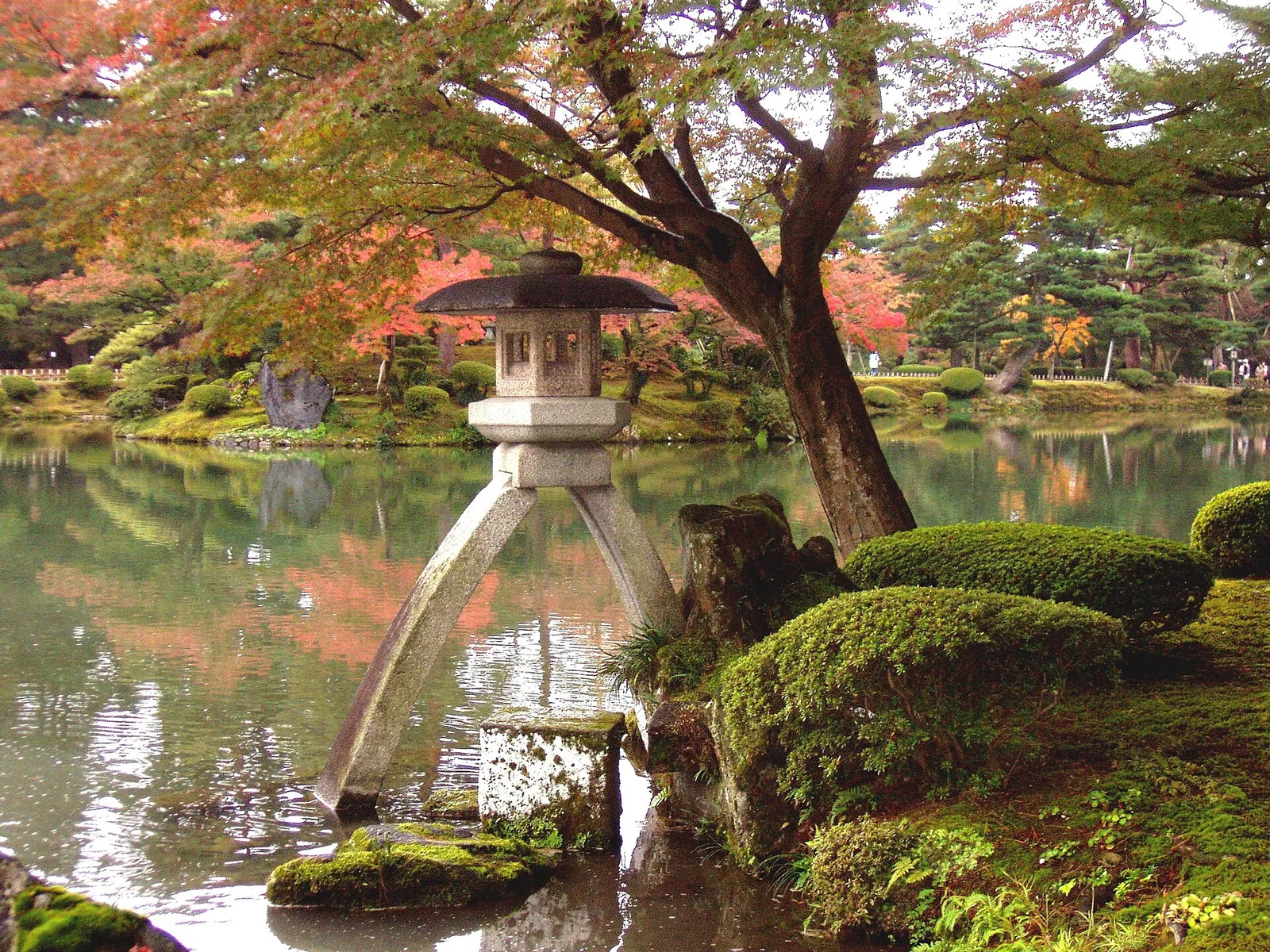
Kanazawa was rich on rice and never bombed, which is why the crafts and the old quarters survived. Kenrokuen is the reason most people come: a garden built over nearly two centuries around a set of principles about what a garden should contain, with a famous two-legged stone lantern by the water and, in winter, ropes strung from central poles to hold the pine branches up under the snow. It is best in the first hour after opening, and a combined ticket with the castle grounds next door is usually the sensible buy.
The afternoon belongs to the crafts. Kanazawa produces almost all of Japan’s gold leaf, which is why you will see it on ice cream here, and several workshops in the Higashi Chaya district run short sessions where you apply leaf to a small object and take it home. The 21st Century Museum of Contemporary Art, a low glass circle in the middle of town, has a swimming pool installation you appear to be standing under, and much of the building is free to walk through even without a ticket for the exhibitions.
Food: Kanazawa is a seafood town, and the local version of sushi is generous with the fish; jibuni, a duck and wheat gluten stew thickened lightly, is the older local dish worth ordering once. The signature experience: the gold leaf workshop, because you leave with the thing you made. Optional tour: a guided garden walk is worth it in winter, when the snow support ropes and the seasonal staging are the whole point and none of it is explained on the signs.
Day 2: The old quarters and the market
Kanazawa has two preserved districts that pull in opposite directions. Nagamachi was where the samurai lived, and it is a grid of earth walls, water channels and one house you can go inside, complete with a garden designed to be seen from a seated position on the tatami. Higashi Chaya is the teahouse quarter, wooden fronted and two storeys, with a couple of former geisha houses open as museums and their gold-leaf rooms upstairs.
Omicho market sits between them and is the town’s kitchen: crab in season, sweet shrimp, sea urchin, and a row of small counters where the sushi comes from the stall thirty steps away. Go before noon. In the afternoon, the temple locals call the ninja temple, for its concealed staircases and lookout gaps rather than any actual ninja, admits visitors on a guided tour only and reservations are essential.
Food: a kaisendon, a bowl of raw seafood over rice assembled from whatever came in that morning, eaten standing up in the market. The signature experience: the teahouse quarter in the early evening, when the lanterns come on and the street empties of day visitors. Optional tour: the ninja temple tour is the one thing here you cannot see on your own, and it books out well ahead in high season.
Day 3: Shirakawa go and on to Takayama
The bus from Kanazawa to Takayama stops at Shirakawa go, which makes the awkward transfer into the highlight of the day. The village is a collection of farmhouses built with steep thatched roofs pitched to shed some of the heaviest snowfall in the country, and the frame is put together without nails so the whole structure can flex. Several houses are open, and standing in the roof space under the thatch explains the building better than any photograph of the outside. The viewpoint on the slope above the village is the classic shot and is a short climb or a shuttle ride away.
Two things worth knowing. The village is a working place where people live, so the paths between the houses are not all public. And in winter it is genuinely deep snow, which is beautiful and also means the bus schedule and the road matter more than usual. Reserve the bus seats rather than turning up, because this leg fills.
Food: hoba miso, miso and vegetables grilled on a dried magnolia leaf over a charcoal brazier, is the mountain dish of this region and appears on almost every menu from here east. The signature experience: the roof space of a thatched house from the inside, looking up at four storeys of timber and rope. Optional tour: a day tour from Kanazawa or Takayama removes the reservation problem entirely, though it usually gives you less time in the village than the scheduled bus does.
Day 4: Takayama, markets and sake
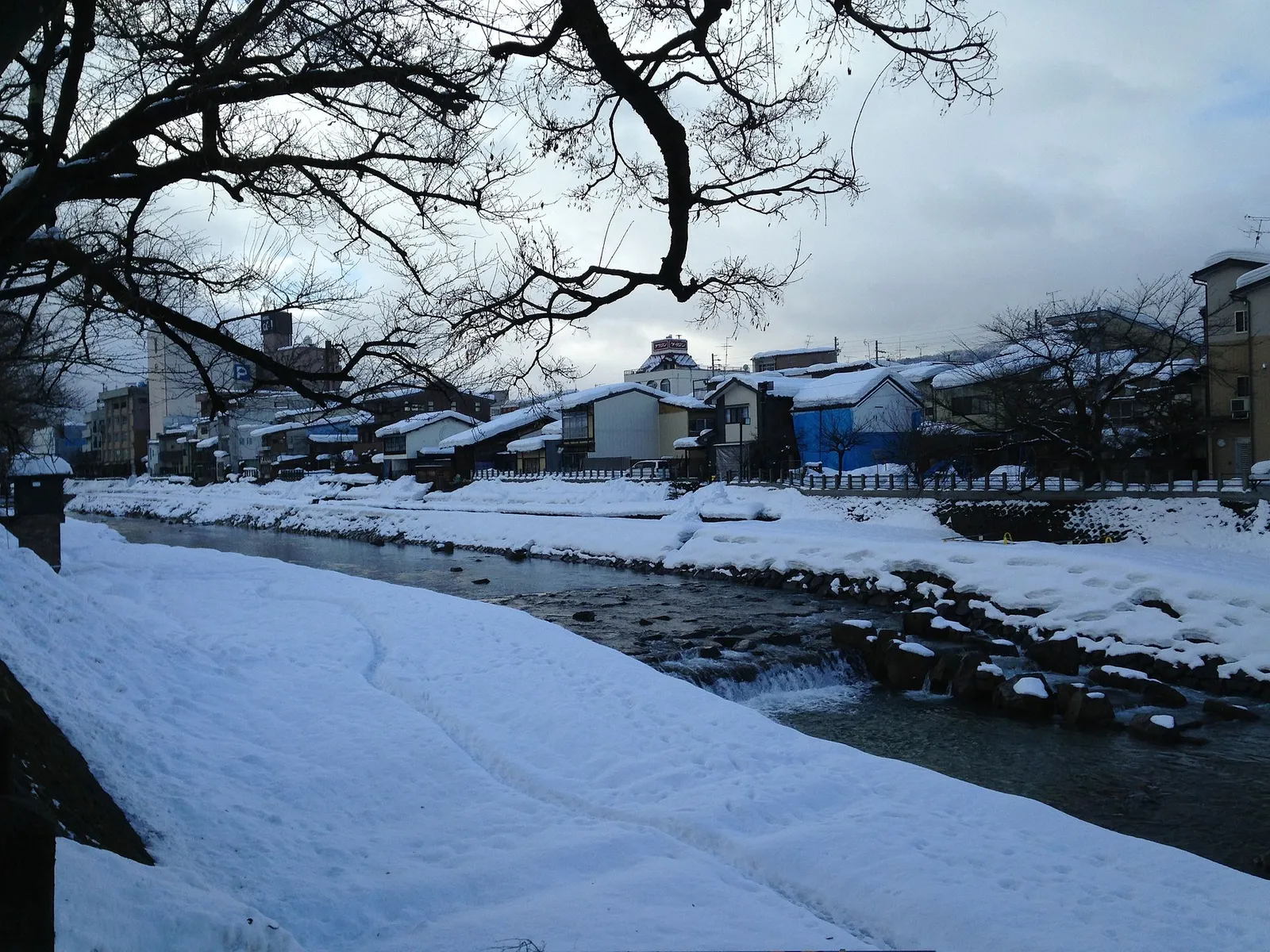
Takayama’s old town is three streets of dark wooden merchant houses, lattice fronts and sake breweries, and the trick is to be in it early. Two morning markets set up daily, one by the river and one in front of a temple, selling pickles, vegetables, apples and crafts, and they wind down by late morning. The breweries in the old town take turns opening for tastings through the winter, and each hangs a ball of cedar branches, a sugidama, above the door when a new batch is ready; the ball browns as the sake ages, which tells you at a glance how fresh the batch is.
Two more things fill the day. The festival float museum holds several of the tall, lacquered and mechanised floats used in the town’s spring and autumn festivals, with mechanical puppets on top. And Hida no Sato, an open-air museum on the edge of town, has relocated farmhouses from across the region with demonstrations of the crafts that went with them, which suits a wet afternoon.
Food: Hida beef, which is the local wagyu, eaten as a skewer from a street stall in the old town or properly as a grilled set; and mitarashi dango, small grilled rice dumplings brushed with soy, from the same stalls. The signature experience: a sake tasting flight in a two-hundred-year-old brewery, with the brewer explaining what the mountain water does to the result. Optional tour: a morning walking tour of the old town covers the merchant house architecture and the guild history, which is invisible otherwise.
Day 5: Kamikochi or Matsumoto
The last day forks by season. Kamikochi is a high valley in the northern Alps, a flat river walk between three-thousand-metre peaks, with a famous wooden bridge over water so clear it looks shallower than it is. Private cars cannot enter, so you leave the vehicle at a car park and take a bus or taxi through the tunnel. It is open roughly from late spring to late autumn and closed through the winter, which is the single most important thing to check before you build the day around it.
If Kamikochi is shut or the weather has turned, Matsumoto is the alternative and it is a good one. Its castle is one of the few original keeps left standing, black and steep-roofed with a moat full of carp, and the wooden stairs inside are as steep as they were built. The town also has a street of old storehouses, a decent craft scene and soba worth a lunch. From Matsumoto the train to Tokyo is direct.
Food: in the mountains, iwana river fish grilled whole on a skewer beside the path; in Matsumoto, cold soba with wasabi grated fresh, since the wasabi farms are just north of the town. The signature experience: the bridge at Kamikochi early in the morning before the buses arrive, with the peaks reflected in the river. Optional tour: a guided walk in the valley identifies the peaks and the wildlife, and guides also know which of the longer trails are realistic on the day.
Practical tips
- This route is buses as much as trains, and the Kanazawa to Shirakawa go to Takayama legs use reserved coach seats, so book them ahead rather than assuming you can walk on.
- Check whether Kamikochi is open for your dates before you plan day five, and have Matsumoto as the fallback rather than a disappointment.
- Winter here is real snow, not a light dusting. Read our seasonal guide and pack accordingly; the same route in summer is a completely different trip with green valleys and alpine flowers.
- Cash still matters more in the mountain towns than in the cities, and the markets in Takayama are cash only in practice.
- A ryokan night fits this itinerary better than any other in Japan, particularly in Takayama or on the Kanazawa coast, and the kaiseki dinner is part of the reason to be here.