Hiroshima is a pleasant, green, unremarkable Japanese city with one of the most affecting museums in the world in the middle of it. Forty minutes away there is an island with a vermilion torii gate standing in the sea, a shrine built out over the water on stilts, wild deer in the streets and a mountain behind. Doing both in a day is the standard plan and it works. The only real decision is which order.
Hiroshima
The Peace Memorial Park, a green space where the densest part of the city stood, with the memorial cenotaph, the flame and the children’s monument covered in paper cranes.
The A-Bomb Dome, the skeletal remains of an exhibition hall left standing as it was, immediately across the river.
The Peace Memorial Museum, which is the reason to come and which takes at least two hours.
The National Peace Memorial Hall, mostly underground and free to enter, holding the victims’ names and photographs and recorded survivor testimonies. Quieter than the museum and easy to miss beside it.
Hiroshima Castle, rebuilt, in a park, pleasant and secondary.
Shukkeien, a compact classical garden, quiet and a good place to sit afterwards.
Okonomiyaki, the Hiroshima version, in the multi storey buildings full of nothing but hotplate counters.
Miyajima
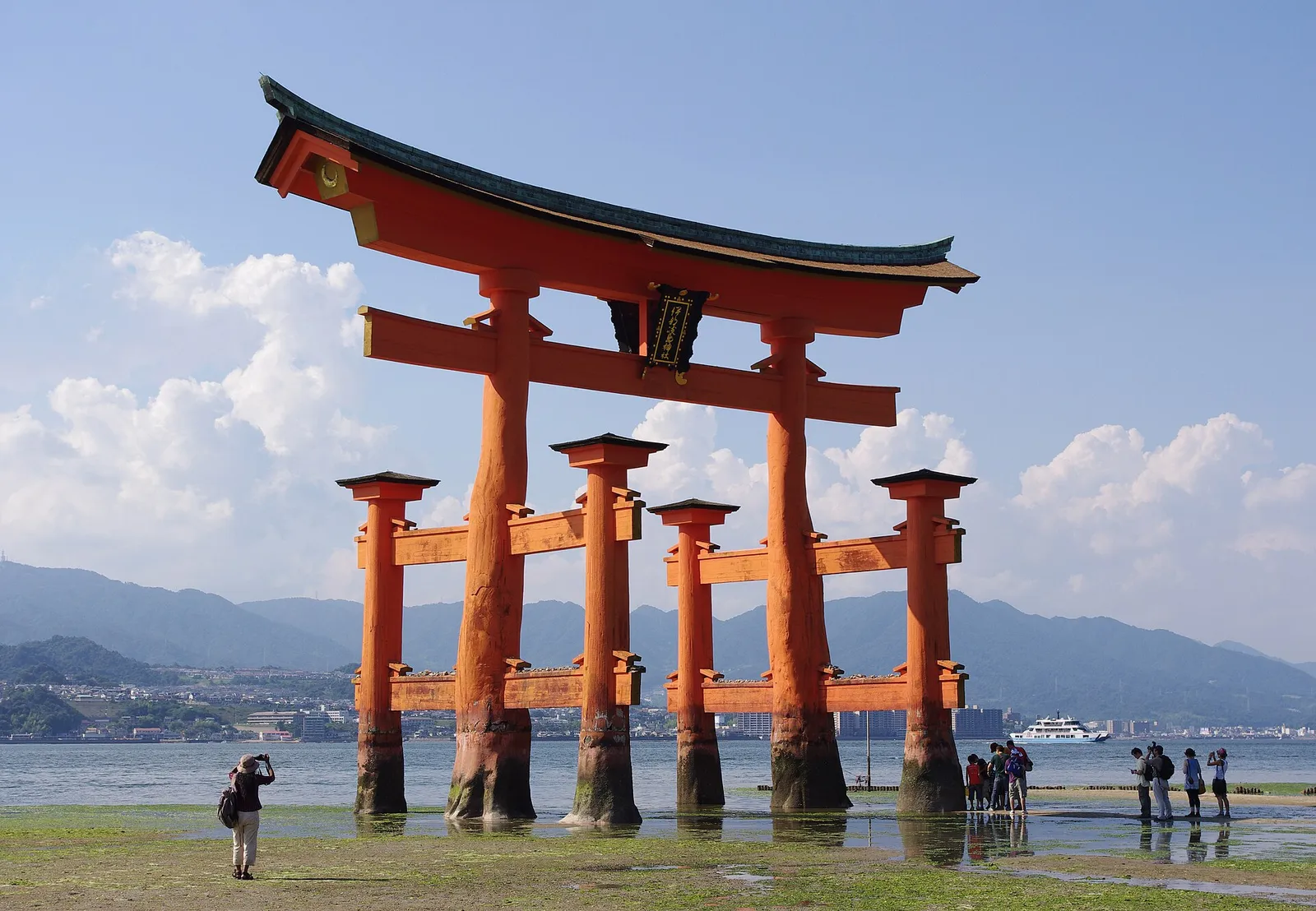
Itsukushima Shrine, built on stilts over the water so that it appears to float at high tide.
The torii, standing offshore, which you can walk out to at low tide and which floats at high.
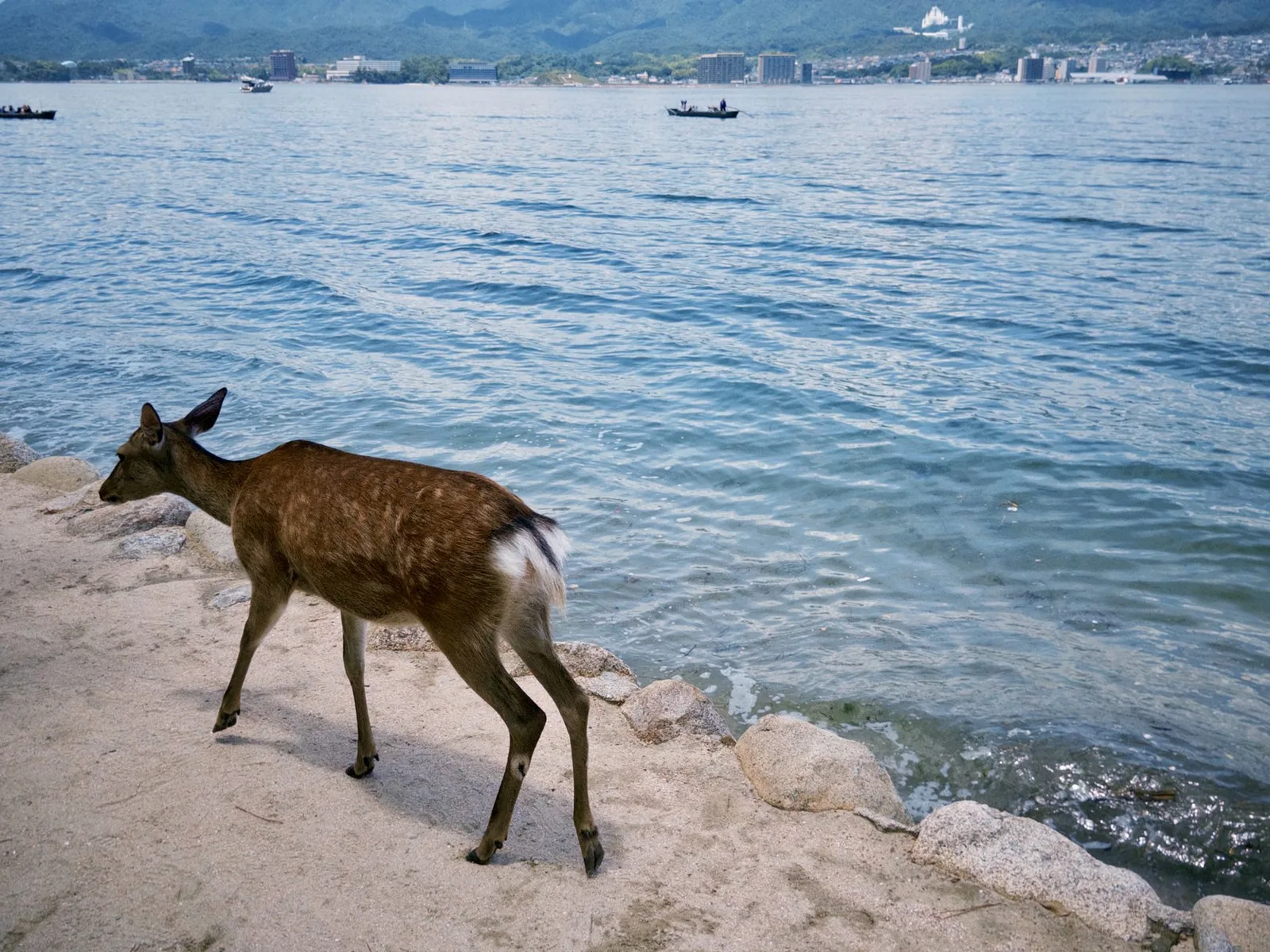
Deer, wandering the streets and the shore, tamer than the Nara ones and equally interested in paper.
Mount Misen, above the town, reached by ropeway and a walk, with monkeys and a view over the inland sea.
Daisho-in, a temple complex on the hillside with hundreds of small statues, largely ignored by day trippers.
Grilled oysters and momiji manju, sold along the main street.
Getting there and around
Bullet train from Kyoto in around two hours and from Tokyo in about four, to the main station.
A tram across the city to the peace park, which is slow, cheap and pleasant.
A local train and ferry to the island, about forty minutes in total.
A direct boat from beside the peace park to the island, slower and much nicer if the weather is fine.
A separate island visitor levy is collected in addition to the ferry fare.
Practical notes
Check the tide table before you go, because the gate is a different sight at each state of the water.
The shrine and the ropeway have their own opening hours and the last ropeway down is earlier than you expect.
The museum can be booked ahead and gets very busy in the middle of the day.
Oysters are at their best in the colder months.
Restoration work on the gate and the shrine has happened before and will again; check current status if it is the reason you are going.
Accommodation on the island is limited and books up a long way ahead.
A second day, if you stay
Almost everyone gives Hiroshima the memorial and the island and moves on, which is a fair use of the time. If you stay a second day, what you get is an ordinary, likeable Japanese city that happens to be famous for the worst day of its life.
Mitaki Temple, a ninth century mountain temple in a maple forest above the city, with three waterfalls, stone statues and a red pagoda. Genuinely quiet, and at its best in autumn colour.
The Mazda Museum, at the company’s home plant, on a guided tour that passes the working assembly line. It has to be booked in advance and it does not accept walk-ups.
A Carp game at Mazda Zoom-Zoom Stadium. Japanese baseball is worth seeing once for the crowd rather than the sport, and Hiroshima’s is one of the loudest. Season runs spring to autumn.
The two art museums by Shukkeien, the city one known for its French Impressionists and the prefectural one next door to the garden, which makes an easy pairing on a wet afternoon.
Hondori, the covered shopping arcade through the middle of downtown, which is where the city actually is in the evening.
Where this fits in a Japan trip
Hiroshima is a day, or a night and a day, and it sits naturally between Kansai and Kyushu.
For how the trains work and what the journey west actually involves, our guide to getting around Japan covers the network.
For whether a pass makes sense once you add a journey this long, our rail pass arithmetic covers the sums.
And for where this fits in a longer route through the country, our three week Japan itinerary covers the shape.
If you would rather build the whole western trip around this, our five days in Hiroshima and the Inland Sea runs day by day from the Peace Park through Miyajima to the art islands and the Shimanami bridges.
The short version
Do the Peace Memorial Museum first thing in the morning, when it is quiet, and give it two hours and then some time in the park. Travel out to Miyajima in the afternoon, checking the tide table first so you know whether you are getting the floating gate or the walk out to it. Climb or ride up Mount Misen if the weather holds, and stay for the evening if you possibly can. Eat Hiroshima okonomiyaki in the city and grilled oysters on the island.