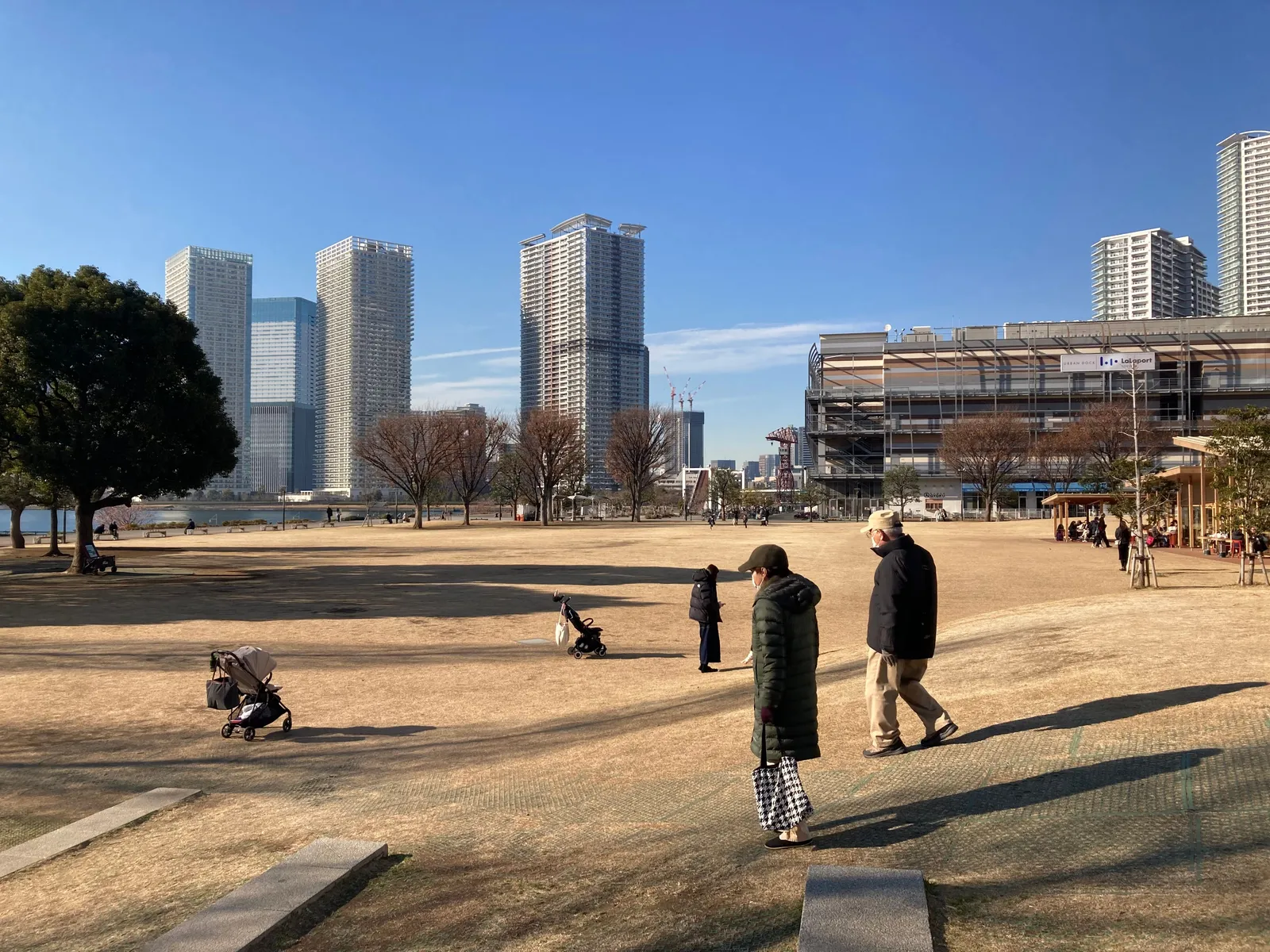
Japan is one of the easiest countries in the world to travel with children, and almost nobody believes that before they arrive. The trains are punctual and quiet, the toilets are everywhere and clean, the convenience stores solve a meltdown at nine in the evening, and nobody minds a child on a train at all. What it is not is a country where a packed itinerary works with short legs. This plan does one big thing a day from a single Tokyo base, keeps travel under an hour, and puts the two long days in the middle rather than at the start. Read our Tokyo guide for the neighbourhoods and the etiquette notes before you go, since a few small rules keep everyone comfortable.
Itinerary at a glance
| Day | Area | The signature experience |
|---|---|---|
| 1 | Asakusa and the river | The temple street, then a boat down the Sumida |
| 2 | Ueno | The zoo and the hands on science museum |
| 3 | Odaiba or Toyosu | teamLab’s mirrored rooms |
| 4 | Kamakura | The Great Buddha and a shallow beach |
| 5 | Shibuya and Harajuku | The crossing, a crepe and a toy floor |
Day 1: Asakusa and a boat
Start somewhere with a wide street and something to buy. Asakusa’s approach to Senso-ji is lined with stalls selling grilled rice crackers, sweet bean cakes and toys, and the temple gate and its enormous paper lantern are the sort of thing children remember. It is busy in the middle of the day and calm before nine, which is an argument for an early start on your first jet lagged morning anyway.
Then get on the water. Boats run down the Sumida from Asakusa towards the bay, and forty minutes of sitting still while Tokyo goes past is worth more on day one than another walk. Nearby, the Sumida aquarium and the view deck at the tall tower next door both work as a wet weather fallback. Keep the evening short and eat early: children who have crossed several time zones are not going to enjoy an izakaya at eight.
Food: the stall food on the temple street is the meal, and a convenience store is the reliable dinner on a first night; ours on konbini food explains what is worth buying. The signature experience: the boat down the river, which costs little and buys an hour of calm. Optional tour: rickshaw rides run around Asakusa with English speaking drivers, and are a short, novel way to cover the district.
Day 2: Ueno park
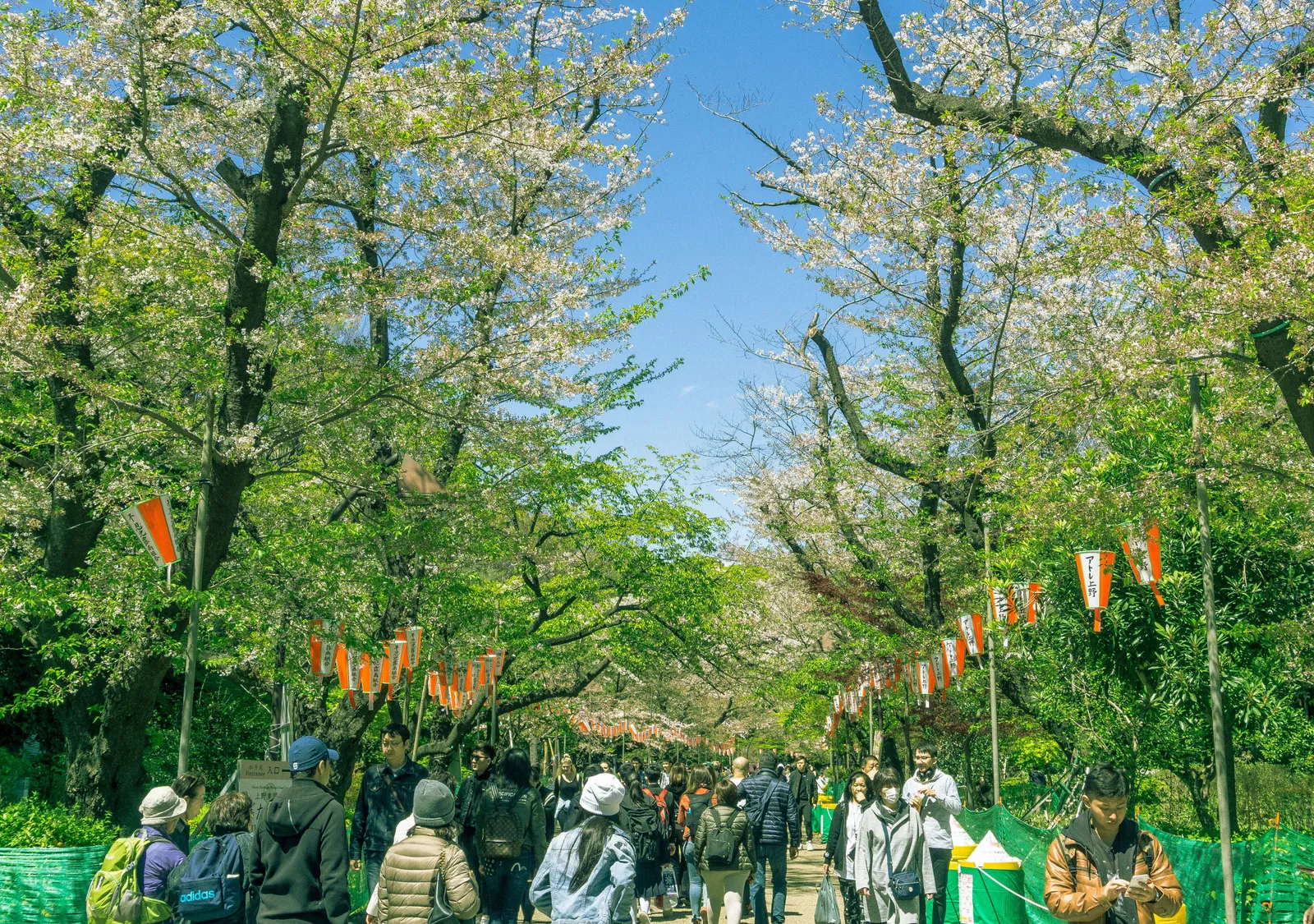
Ueno is a park with a zoo, several museums and a pond with swan boats, all within a few hundred metres of each other, which is exactly the geometry you want with children. The zoo is large and old fashioned in places and holds pandas, which decides most children’s opinion of it. The National Museum of Nature and Science next door is the one that earns the day: dinosaur skeletons, a whale outside the entrance, and enough to touch and push that nobody asks to leave.
The park itself does the rest. The swan boats on Shinobazu pond are cheap and slow, the shrine paths are shaded, and Ameyoko market on the edge of the park is a noisy covered street of food stalls and cheap goods that suits older children. If the museum has worn everyone out, the park is a good place to do nothing for an hour.
Food: Ameyoko has takoyaki, fruit skewers and cheap noodles; there is a family restaurant chain on almost every corner nearby with picture menus and children’s sets. The signature experience: the dinosaur hall, which reliably produces the day’s best photograph. Optional tour: none needed here; this is a day to leave loose.
Day 3: teamLab and the bay
teamLab is the one attraction in Tokyo that works equally on a four year old and a fourteen year old: rooms of projected light that respond to movement, a floor of water you walk through, mirrored halls, and a section where children colour in a fish and watch it swim into the projection. Tickets are timed and sell out, so book as far ahead as you can and pick a morning slot. Wear shorts or roll up trousers for the water room, and expect to lose all sense of direction.
Around it, the bay area has a science museum with a demonstration hall, a huge shopping complex with an indoor amusement floor and a full size robot statue outside another. This is also the flattest, widest and most pushchair friendly part of the city by a distance, which matters more than it sounds after two days of station stairs.
Food: the mall food courts here are large, air conditioned and cheap, with everything from ramen to curry rice, and every one of them has high chairs. The signature experience: the room where a child’s drawing appears in the projection and swims away. Optional tour: not needed, but do book the entry slot rather than turning up.
Day 4: Kamakura
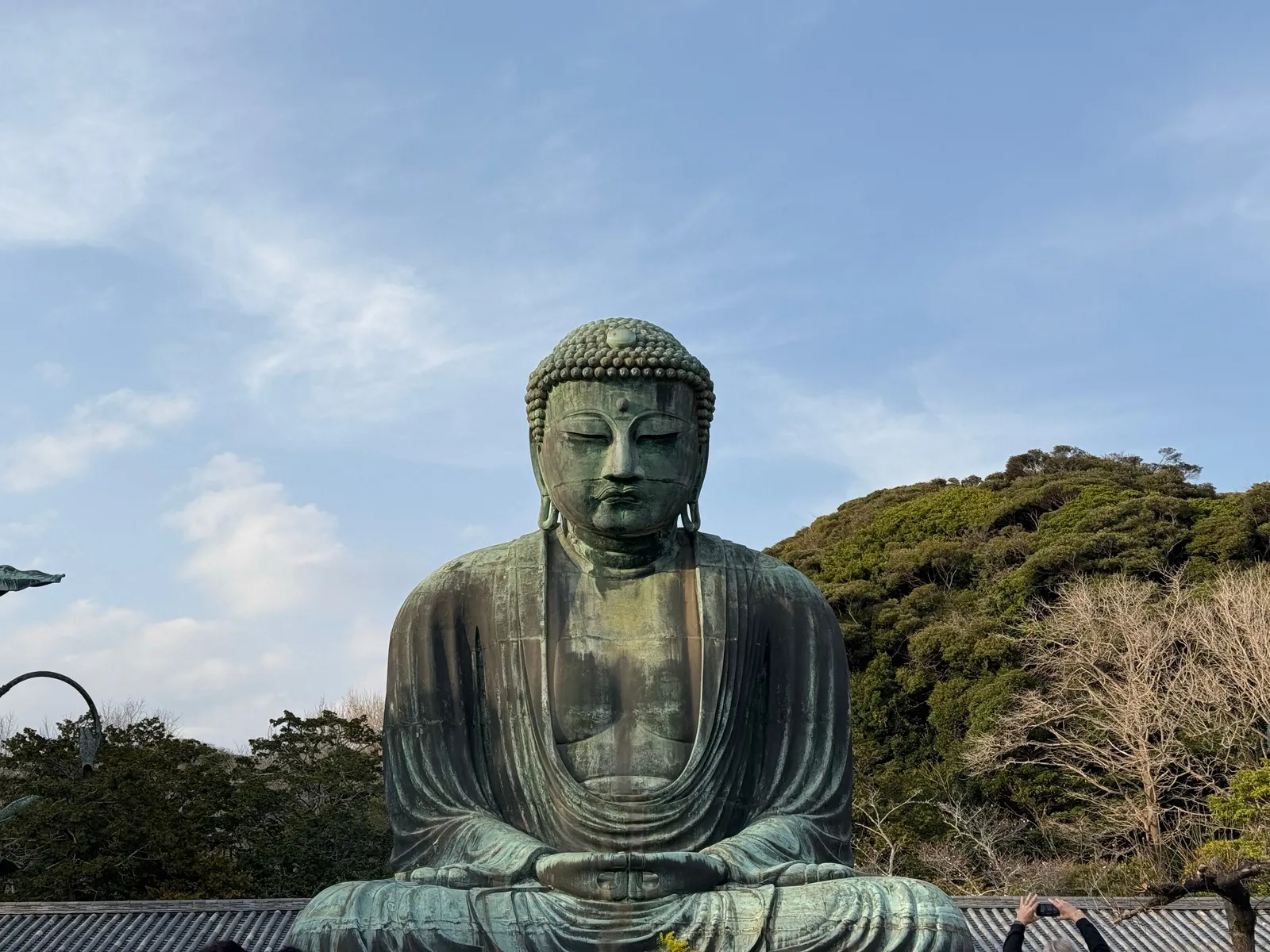
One hour south of Tokyo, Kamakura is a coastal town of temples that was the capital eight hundred years ago, and it makes the best day trip for families because it combines a big sight with a beach. The Great Buddha is eleven metres of bronze sitting in the open air, and you can go inside it for a small extra charge, which is the sort of detail children remember over any amount of architecture. Hasedera nearby has caves, a cliff garden and hundreds of small stone figures.
The rest of the day belongs to the sea. The local Enoden line runs between the temples and the coast on a single track that squeezes between houses and then opens onto the water, which is a fun ride in itself. The beach is shallow, the surf is small and Enoshima island at the end of the line has a causeway, a cave and a lighthouse tower with a view back towards Fuji on a clear day.
Food: the street up to Kamakura station is full of small shops selling shirasu, tiny whitebait served over rice, and sweet potato ice cream; both are easier sells than they sound. The signature experience: the Enoden train running between the houses and along the sea wall. Optional tour: a Kamakura day tour removes the planning, though this is an easy day to do alone with a train pass.
Day 5: Shibuya, Harajuku and a toy floor
Finish with the city at its loudest, which children generally love. The Shibuya crossing is a spectacle from the ground and better from one of the cafes or the deck above it, and the dog statue outside the station is a story worth telling before you get there. Harajuku, one stop away, has a narrow street of crepe stands, novelty shops and cotton candy the size of a head, and Yoyogi park next to it has space to run.
Save an hour for a department store toy floor or one of the big toy shops in Ginza or Harajuku, because Japanese toy retail is an attraction in itself and it doubles as the souvenir problem solved. Then the food hall in the basement of any department store, where you assemble a picnic from thirty counters, is the right last dinner: everyone chooses, nobody negotiates.
Food: a department store basement food hall, and a Harajuku crepe on the way. The signature experience: the crossing from above, with the crowd assembling and dissolving every couple of minutes. Optional tour: none; keep the last day short and near the hotel, because packing with children takes longer than you think.
Practical tips
- Get everyone an IC card, including the children’s version, which is discounted and works on every train and bus and in the convenience stores.
- Pushchairs are fine on trains but lifts in older stations are sometimes at the far end of the platform. The station apps show lift locations, and staff will always point you to them.
- Book the teamLab slot before anything else in this itinerary, because it is the only fixed point in it.
- Family rooms are scarce and small in Japanese hotels, and many rooms have a strict occupancy limit. Book early and state the number of children including infants.
- Convenience stores are the parenting safety net: onigiri, fruit, hot water for noodles, nappies, and a clean toilet, open all night.
- For the wider trip, our first-timer guide covers the basics, and the food guide has the dishes children take to first.